Uncommon Portraits: Brian Zheng
Brian Zheng on uncertainty, concentration in China, and why teaching made him a better investor.

World of Allocators is a community built on a simple idea: investors show up here as people, not as the organizations they represent. One of the ways we bring that to life is through the volunteers who give their time to make everything run. Uncommon Portraits is our series dedicated to them. A real introduction to the humans behind the work.
Brian Zheng is Vice Chair of the Beijing OpCo, which builds WOA’s Beijing chapter.
Brian is a value investor who built his career across Singapore and abroad before returning to China to launch his fund Tangfeng Lions Fund and co-founded Lions Academy. Brian brings an outside-in perspective on investing. In this conversation, he talks about going independent in China, why concentration can be the more disciplined choice, and what fifteen years has taught him about being wrong.
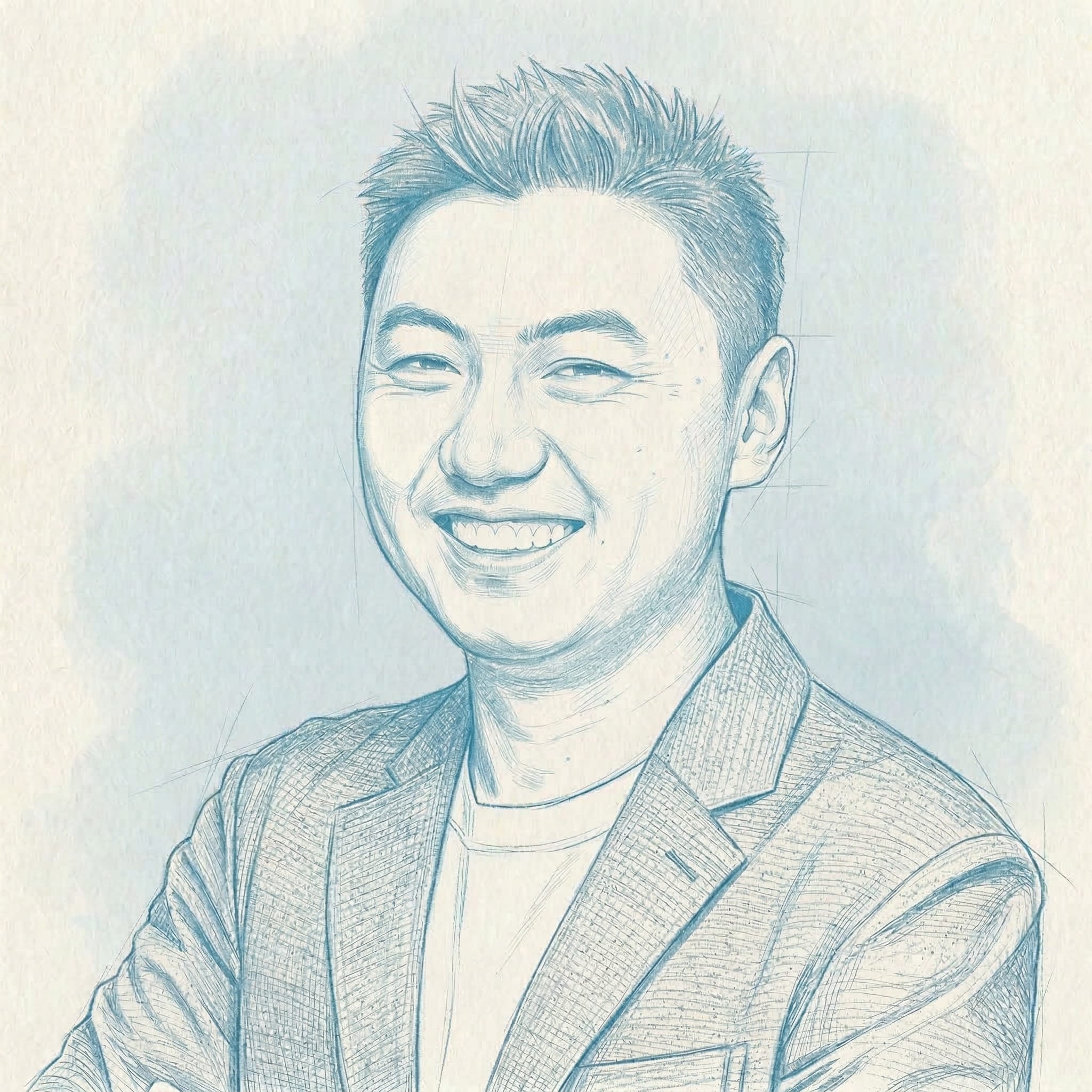
Where did you grow up and what was your upbringing like?
I just got back from my hometown for the Spring Festival (smile). I’m from Weifang, Shandong, so going back after so many years gives you a fresh perspective on the place you grew up in.
I lived in Weifang until I was 18 with a pretty ordinary upbringing, but a comfortable and happy one. Then I got lucky — I received a scholarship and went to Singapore for university, where I entered the investment world professionally.
About six years ago I came back to China, and four years ago we went independent and launched our own fund. Alongside that, I’ve been doing some work in investor education, which is actually how I got connected with the World of Allocators community and started contributing as a volunteer. So that’s roughly the arc of how things unfolded.
Was investing always the plan, or did you stumble upon it?
You know, I’ve actually thought about this question before.
Growing up— which was true for most Chinese families at the time—business and investing were never discussed at home. Money as a concept was barely touched on. So in a way, I’d say: rather than saying I found investing, investing found me.
Before Singapore, my thinking was more like an engineer—very rational, always looking for the rules behind things and understanding how they work. Growing up, business and finance were simply not part of my world.
In my third year of university, I was lucky and got to go to Merrill Lynch for an internship. And that was the first time I really came into contact with investing. And once I did... I found it very, very fascinating.
I discovered that investing is not just rational. It takes logic as a foundation and layers on top of it everything about how people, how all constituent participants actually behave in the real world. When you start reading business history, investing history, asking why people did what they did in 1920, why they made those choices, you start to realize this world is not rational at all. And that's what got me. That’s honestly the main reason I’ve stayed in this field for over fifteen years—the underlying logic of how it all works. I never tire of it.
After more than a decade abroad, what brought you back to China? What made you decide to go independent and launch your own fund when the market wasn't in great shape?
Yes. So about four years ago, I launched Tangfeng Lions here in China with my co-founder Ice (Zong Peng) - a value investing fund built around concentrated positions and the pursuit of absolute returns.
Behind that decision were two things, really. One was my thinking about the industry in China. The other was something personal.
At the core of it, having invested for more than ten years, I kept coming back to the same belief: investing has to ultimately be about creating value. The most basic job of a fund manager is to compound returns for your investors. You can do that by joining a big platform and focusing purely on that. Or you go fully independent and take on everything — the investing, the fundraising, all of it.
My sense of China was this: if you want to invest well here, one of the most important things is to attract the right investors through your fundraising. People who share the same values as you. Without that, good outcomes are very hard to come by, and you cannot focus on investing alone. That's part of why we run our investor education courses at the firm: to find and grow a group of like-minded people. Though honestly, it's less about finding each other and more about coming together because we already think the same way.
There's also a structural reason. China, unlike the US, Europe, or Japan, doesn’t currently have a mature institutional investor ecosystem. In those foreign markets, if you run a fund, you're working with sophisticated allocators and the division of labor is clear: investor education and capital deployment are separate jobs. But in China, that wealth management infrastructure is still developing, so you can't rely on others to handle the investor side. You have to build the whole thing yourself.
And honestly, there’s a much simpler belief underneath all of this: I just can’t picture Chinese wealth management, ten or twenty years from now, still being dominated by the big American names. That felt like an opportunity that should belong to people who understand this culture, this context, from the inside.
Coming back and actually doing it though, I quickly realized you do have to reset everything. The experience from overseas was valuable, but one place has its own way of doing things. In the end, the goal is the same: creating value for your investors. But getting there looked quite different from what I expected.
You just described a business built around trust, shared values, and finding the right people. That's not a purely rational exercise. And you mentioned that China's market has its own emotional texture, its own cycles. So how do you actually think about that side of investing: the human element and things you can't fully model or measure?
Let me try to focus a bit. I think intangibles in investing show up in two places.
The first is in how a company creates value, and that process is not always rational. Take POP MART, which everyone’s talking about right now, any luxury brand, or the clothes you wear. Why did you buy them? That transaction didn’t happen out of logic. And honestly, if everything in this world were purely rational, I’m not sure the world would be as interesting, right? So emotion in business has to exist. It’s actually one of the most important parts of how companies create value for society.
The second place where human intangibles show up is in the constituent parties. In investing, decisions are made by humans, so of course there’s an emotional element: when everyone dislikes a company, it falls more than it should, and when everyone likes it, it rises more than it should. Strong cycles appear.
In China, we have to be honest: the capital market is relatively young and the participants are not as seasoned. So the emotional component weighs heavier and the cycles more obvious.
Yet that brings us back to the same point. When others are being emotional, we try to be a little more rational. When you see a news article, your first reaction is just that, a reaction, and you have to step back, apply a more systematic lens, and ask: can we actually use this moment, this emotional market, to create more opportunity for ourselves?
The conventional wisdom in uncertain times is to diversify. But your latest investor letter points in the opposite direction — your team has actually been moving toward a more concentrated portfolio. What's the thinking there?
At the stock level, the core problem we’re facing right now is this: AI hasn’t fully arrived yet, but its negative impact on certain businesses already has. A lot of companies we used to follow, stocks that everyone considered safe, reliable, dominant in their category, may no longer have the competitive strength they once had. The world has shifted underneath them.
So we went through our entire universe, over 200 companies we'd been tracking seriously, and asked honestly: which of these still have genuine long-term competitiveness, right now, today? We got to about seventy or eighty. That was a real moment. A lot of what we'd once considered good simply belongs to the past now.
In an environment like this, you can't divide your portfolio into defenders and attackers. Every single company needs to do both jobs at once: protect value and grow value at the same time.
At the portfolio level, the old approach of assembling a patchwork, some dividend plays here, some growth there, some defensives on the side, in the expectation that the whole would outperform its parts, that logic has broken down. The correlations between sectors we used to rely on have shifted, and you no longer know what's offsetting what.
So why concentrate? Because in a world that changes this fast, stacking up a bundle of 60-point decisions gets you nowhere. You need to find your 80-point decisions and go there. The positions themselves should have truly independent drivers from each other, so the portfolio stays diversified at the risk level, even when it looks concentrated on the surface.
We’ve been running this way for over a year now, and the volatility of our portfolio has come in at roughly sixty to seventy percent of the broader market. So in practice, it’s held up. It looks like concentration, but it’s actually built to give investors the highest possible certainty of return.
That’s interesting, and I think we’ve spoken about this before — For you, the biggest risk in investing is perceptual — not just what you know, but how clearly you see everything. How do you build a system that already accounts for the limits of your own understanding? In a world shifting so fast, is there a way to structure your thinking so that uncertainty itself becomes something you can work with?
That is actually a really important point. The question is: how do you build an investment system that can still deliver long-term returns for investors even when the macro is out of your control, or when some of your individual stock calls turn out wrong?
The way I think about it is this: the system cannot only account for what happens when you are right, but it also needs to build in real room for error. After fifteen years of doing this, no matter how convinced you feel about an idea, no matter how much you love it at a particular moment, mistakes will happen and unexpected events will happen. That is not a possibility but an absolute certainty.
So the question is not whether you will be wrong. It is how you handle it when you are.
For us, the answer has two parts. The first is that no matter how high your conviction, you always need a margin of safety — you buy at a discount, and that is non-negotiable. The goal is simple: when you are right, you make a bit more; when you are wrong, you lose a bit less. Build that asymmetry into every position.
The second is at the portfolio level. Even within a concentrated portfolio, the drivers behind each position should be genuinely independent from each other, across different sectors and different underlying forces, so that as a whole the portfolio becomes antifragile. Even with concentration, you can still compound.
Investing in China means operating in an environment where policy and regulation can shift in ways other markets don't experience. How does that factor into how you evaluate companies?
If you’re doing value investing in China, you have to accept that everything here (in China), every company, every regulator, every government body, is rooted in Chinese culture. That’s just the reality. So the question becomes, how do you rationally break that down?
The framework we’ve arrived at is that a company worth investing in China needs to satisfy two things at the same time. First, it needs to create genuine social value. Second, it needs to have real commercial value. Both. Not one or the other. Only companies that have both can truly sustain themselves over the long term in this environment.
Now “social value” sounds vague. So let me explain it more concretely. China is a single, self-contained market. In a market like this, especially for platform companies such as large internet platforms like Meituan, there is a natural tension. When one platform captures too much of the profit, while the merchants, the delivery riders, and everyone else in the ecosystem do the hard work, that is inherently unstable and needs rebalancing. The mechanism we end up seeing is regulatory intervention from the Chinese government. But really, what you’re watching is a redistribution of interests between the platform, the merchants and the consumers. The administrative action is just how that rebalancing shows up on the surface.
We can’t change how this country operates. But what we can do is try to anticipate, ahead of time, which companies carry that kind of risk, and which ones, after the dust has settled and the market has overreacted, have actually become too cheap. That’s where the opportunity is. It’s a bit like the opening line in the Romance of the Three Kingdoms: what has long been divided must eventually unite, and what has long been united must eventually divide (分久必合,合久必分). The cycle keeps turning.
After all these years in investing, is there a belief you held early on that you’ve had to let go of?
Working overseas for ten years, I was wired into a system that runs on relative returns. And look, you can do value investing in that environment, but it’s a bit like doing it with your hands tied. You’re looking three to five years out on fundamentals, but you’re being evaluated on whether you beat the index. When markets fall, you need to fall less; when they rise, you need to rise more. Which means you can never stray too far from the index. That’s just the mental framework the whole environment builds into you.
Coming back to China and going independent, I’ve spent the past few years trying to get back to the most basic principle of investing. When something is cheap, you buy. When it’s expensive, you sell. That’s it. The logic is incredibly simple. Everyone understands it.
But then comes the hard part. FOMO. You sell, and then it keeps going up. What do you do with that?
Honestly, that’s a really hard question to answer. But where I’ve landed is this: when you’re pursuing absolute returns, there will be moments where you and the rest of the market are simply going in different directions. I’ve accepted that. I accept what that costs and what it gives back.
Buying at the bottom has always felt natural to me. Selling near the top, that’s genuinely hard. Everyone says just eat the middle of the fish, skip the head and the tail. But how do you actually know where the tail starts? Relative return is easy; you just stay in the market and don’t make that call. But absolute return means we have to sell when there’s a bubble. We have to. It’s hard, and I’ve accepted that it’s hard, and we’re getting better at it.
That’s probably the biggest thing that’s changed for me in the past year or so. We’ve committed to that path fully, one hundred percent.
Investing isn't something you do alone. How has your relationship with your LPs evolved since you started the fund?
On the investor side, it really comes down to values, and there’s no right or wrong here — it’s just how each person chooses to operate.
Our philosophy is simple. If we generate returns for our investors, returns that are uncorrelated with the market, returns they genuinely cannot get elsewhere, then we earn our performance fee. On the management fee side, we don't profit from it. It covers research and operating costs, and whatever is left over goes back to investors. That's just how we're wired.
In practice, we ask new investors to start with a smaller amount. Not their biggest allocation, but just enough to actually experience what we do: what they receive from us every month, what our quarterly meetings feel like. Let them feel it first.
And when markets are deeply down, that's when we actively go out and fundraise. In early and mid 2024, we did exactly that. Nobody else was raising at those moments, but we believed it was the right thing to do. Looking back, the investors who came in at those points have done meaningfully better.
What that reinforced for me is that you don’t just communicate with investors when markets fall — you should be raising when markets fall. Unconventional, yes, but it’s right.
And something I discovered along the way: when you’re genuinely transparent with people, when you just tell them the truth, investors are not as fragile as you might think. They understand markets move, and you just have to communicate with them.
This was partly sharpened through attending WOA’s GP Accelerator program, which gave me a much deeper understanding of how the world’s most sophisticated institutional investors actually evaluate a GP. They’re not just looking at your returns — they want to see your system: investment team, operations team, risk management, and most importantly, a robust framework that makes your returns genuinely sustainable over time. Long term, sustainable, compounding — each of those words alone isn’t so hard, but together they’re extremely difficult. That’s probably the single biggest thing the program gave me.
You mentioned your firm’s investor education. Can you tell us more about the course and why you decided to do this?
When we came back to China and started building the team, we found that we couldn’t hire the analysts we were looking for. It wasn’t because analysts here aren’t hardworking, they really are - they track things in incredible detail. But the more fundamental questions - such as is this company even worth analyzing, will this company still exist in three years, those weren’t really being asked. The structural, first-principles thinking just wasn’t there.
Our philosophy for the team is simple: every single person should be developing into an independent, mature investor. I want partners, not subordinates.
So we started by building a training programme internally for our own interns and analysts, and the feedback was strong. Gradually, this programme (Lion’s Academy) became something we opened up more broadly as an offered course to the outside, covering how to do value investing in markets like China and the US in methodology, real case studies, and different investment styles. Beyond frameworks and process, every person also needs to find the approach that genuinely suits who they are. We’re about to start our seventh cohort!
What the course has given me personally is something I didn’t fully anticipate. Value investing can be a lonely thing, you’re making independent judgments, which by nature puts you out of step with the mainstream. Being able to gather a group of people to think through things together, share each other’s thinking every six months, that’s genuinely valuable.
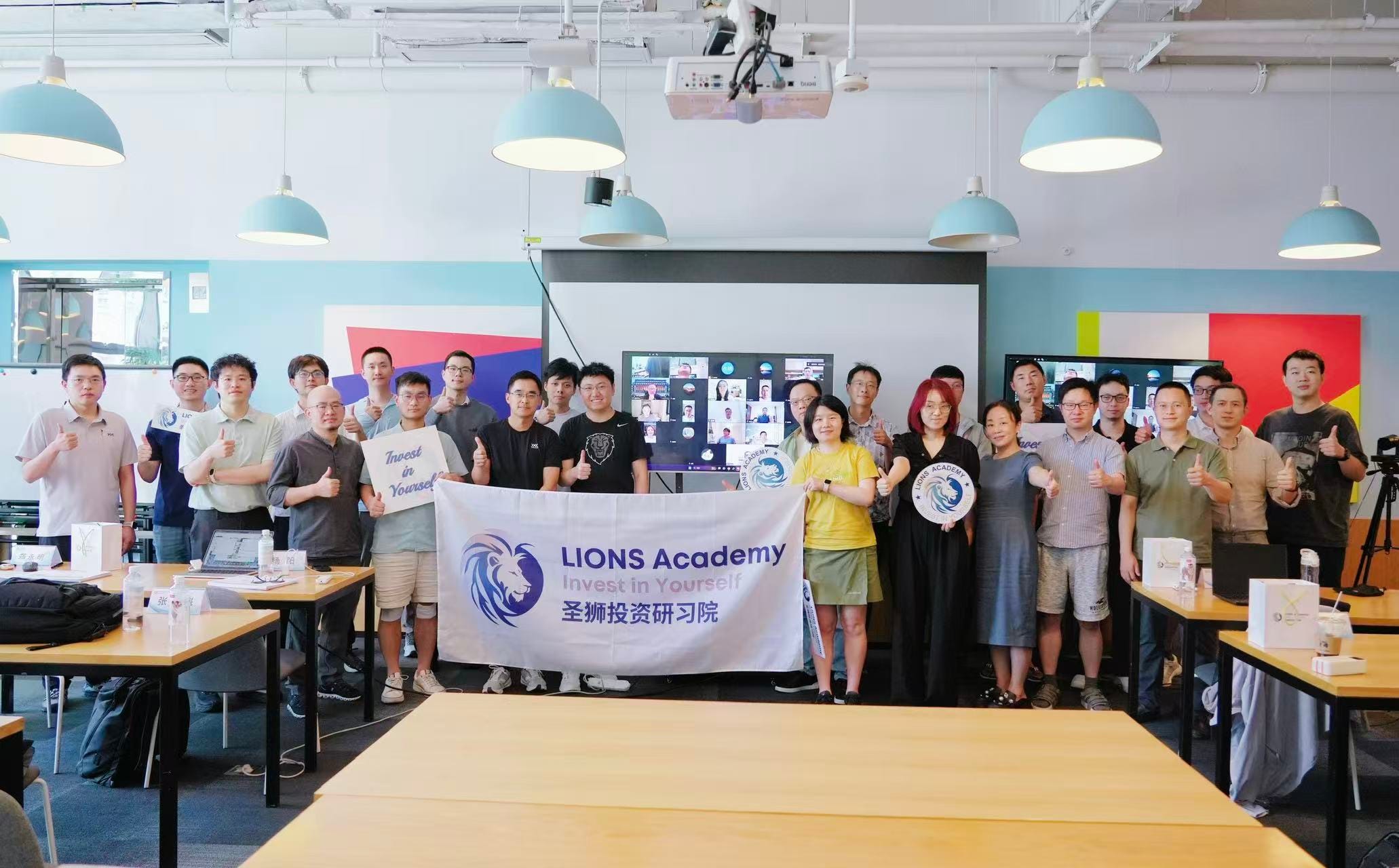
The 5th cohort of Lions Academy, closing out their final class.
For you, What does it mean to be a teacher?
Ice is probably the better teacher between the two of us. (laughs)
But honestly, this side of things has given back to me more than I expected. It’s not just about sharing ideas or the mistakes we’ve made along the way. The act of actually organizing all of that, sitting down and thinking it through clearly enough to teach it, that process in itself becomes another iteration of our investment framework. It forces you to go deeper. When you’re a bit lazy with a thought, you can leave it half-formed, but teaching doesn’t let you do that because you you have a responsibility to the students.
The second thing is the feedback. Once your thinking is out there, you collect a lot of it, and that genuinely accelerates your own development in ways that are hard to get otherwise.
And then there’s something about the idea of paying it forward. Ice and I received something real at Columbia. Some of the best value investors in the world gave their time and shared openly, with nothing held back. That really stayed with us. When you’ve received something like that, you feel a responsibility to pass it on and keep it moving forward.
My parents were both teachers, as it turns out. They probably never imagined I’d end up here. There’s something to that.
Just like investing, it sounds like teaching also found you. It’s wonderful.
Indeed (smile).
To end things, I’d love to learn how you got in touch with WOA, and what you want to build?
I first got to know Nicole (Su) and Shinya (Deguchi), and that was the starting point. I went to some events, then joined the Beijing chapter and the GP Accelerator program.
What struck me quite quickly was that everyone was putting in genuine effort to build relationships with each other, LPs and GPs building the community together, all on a volunteer basis. You don’t see that often.
Once I became a volunteer, I realized WOA’s values and my own were very closely aligned, so I gradually took on more leadership and involvement. I want to pass on what I’ve received, serve the existing members well, and hopefully inspire the next generation to step up too.
On the culture side, what I keep coming back to is that every single person in this community has something valuable to contribute, and that shouldn’t be limited by their background or the size of their company. I’m looking at real individuals, and every person has their own unique spark.
Last year in Beijing, we focused on events with outside speakers, but this year we’re shifting toward member-led sharing, more participation from the people already in our community, because that creates a more genuine connection. That thinking came directly from what we learned running our firm, and we’re finding the same principle applies here.
Last but not least, for young people just entering the investing industry, who are anxious about what AI means for their careers, what would you tell them?
First, I would say young people are almost certainly better than me at using AI and navigating the digital side of things. They are digital natives. So that part I am not worried about for them.
But from what I have been learning over the past two or three years, including inside our own team, there are three things I would point to.
The first is: from day one, define yourself as the final decision maker. Inside our team, we do not really have the concept of an analyst role anymore. You are the fund manager. You are the one who makes the call in the end. A lot of the work in between, especially the fundamental data crunching, AI will handle that better than any person. But the decision, that is yours. Own it from the start.
The second is: try to become a genuine expert in at least one industry. AI might score 60 out of 100 across a broad range of things. But in a specific domain, a real human expert can go beyond that. The way you build that is by going deep into one area first, point by point. Your circle of competence grows from individual dots.
The third one is something I have been thinking about a lot recently. Investing is called investing, not researching. The starting point is the moment you actually put money in. The feedback you get when real money is on the line is completely different from anything you get just from studying. So start investing as early as you can, whatever the amount. Today’s generation has more resources than previous ones. You can ask family, ask people around you for a small sum to start. The amount does not matter.
Just start.
Brian Zheng is Fund Manager of Tangfeng Lions Fund, an investment management firm operating across China and U.S. equity markets. The firm is built on the conviction that lasting returns come from identifying best-in-class companies through three lenses: social value, business value, and investment value. Lions Associates balances growth with value in its portfolio construction, underpinned by rigorous risk management. Spanning two of the world’s largest equity markets, the firm applies a consistent, fundamentals-driven framework to both.
Brian is a graduate from Columbia Business School’s MBA program.
Uncommon Portraits is a member series produced by World of Allocators, featuring the volunteers who build and sustain our community.
The content produced by World of Allocators Limited is provided for informational purposes only and should not be construed as legal, business, investment, or tax advice.