Uncommon Portraits: Steve Chasan
Steve Chasan on applied philosophy, the Rothschild Foundation, and atoms over bits

World of Allocators is a community built on a simple idea: investors show up here as individuals, not as the organizations they represent. One of the ways we bring that to life is through the volunteers who give their time to make everything run. Uncommon Portraits is our series dedicated to them. A real introduction to the humans behind the work.
Steve Chasan is an operating committee member of WOA’s Rest of World Chapter, helping organize events with some of the most consequential minds in global capital allocation, and bridging Asia's investor community to networks across global capital markets.
Steve Chasan founded Catalyst 42, a deep tech fund-of-funds platform focused on scientific and engineering innovation; prior to this, he served as Head of Investments at the Rothschild Foundation, where he co-managed a $4bn multi-asset portfolio across the full range of global asset classes. He is currently a venture partner and independent advisor.
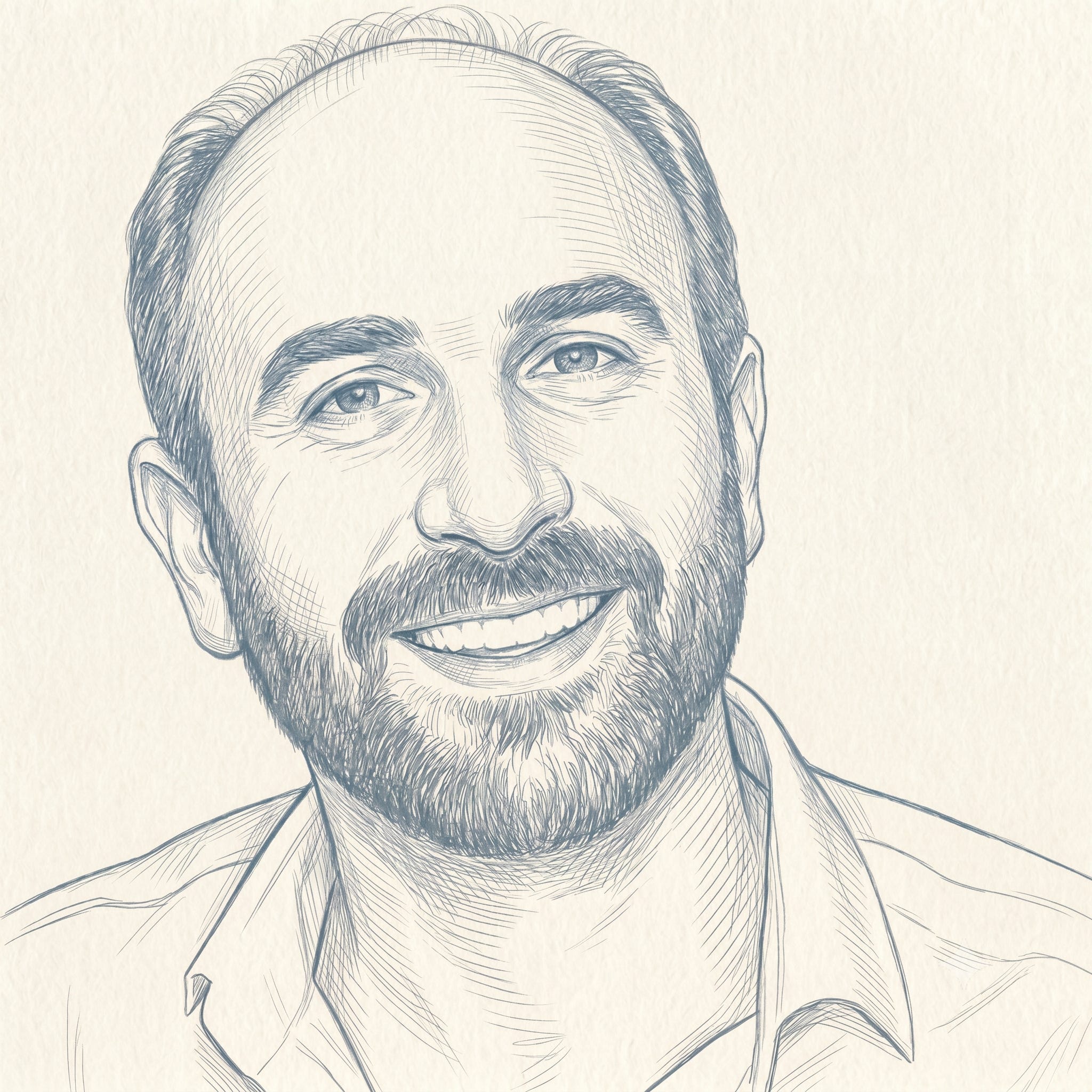
Steve started as a philosophy PhD candidate at Columbia, left the lecture hall for JP Morgan's trading floor, and eventually founded Catalyst 42 around the conviction that hardware is the next frontier of durable value.
In this conversation, he talks about why he thinks of investing as philosophy with a verdict, the probability framework he built across three decades of markets, why AI is a dangerous bubble, and what the relationship between an LP and a GP looks like when it’s working at its best.
What were you like as a child that led you to study philosophy?
I was a bit rebellious.
My sister, who was firstborn, was much more into pleasing my parents and being the perfect child – the conformist. Somehow I fell into being the nonconformist, testing rules and testing limits. Later, I realized this was setting things up for studying philosophy, where you spend most of your time questioning the things that people take for granted.
When I left home for university, I started in the business school at Boston University - which I found boring. But I had one elective where I had to choose something from the humanities, and that’s where I took my first philosophy class, which became what I focused on as the one subject that touches everything else. In every field, you always end up somewhere philosophical if you truly want to understand it more deeply. Examples include the philosophy of art, the philosophy of psychology, philosophy of physics, etc. It felt like the right home base for me and what college was meant for.
What were the portable skills from your training in advanced logic and philosophy that led to stronger first principles thinking, compared to peers trained in finance?
In philosophy, you’re trained to question assumptions unemotionally.
I’ve seen many investors get upset or angry if their investment assumptions are being questioned, especially after they did really thorough analysis and research. But in philosophy, we were intentionally trained to ask what if questions as an essential part of critical analysis. This approach can lead investors to pose questions such as what if the sector experiences a supply shock from a war, or what if demand changes because of some technological development?
Not being afraid to tackle hard intellectual problems which involve new ways of thinking is where value and great investment opportunities can be found. Some people who are only trained in finance know how to make an equity model, a DCF, over and over again, but the real advantage in investing is looking at things in a different way. If something’s perfectly priced, there’s probably no upside. You have to have a view that’s different from what other people believe, and you have to be right.
By the same token, there were also some things I had to unlearn. When I left Columbia University and got my job at J.P. Morgan, I was on the trading floor, in the FX options group. I quickly learned what you could call the 80-20 rule: we’re under time pressure, we need to get 80% of the answer in 20% of the time. It’s not worth spending five times longer to get the perfect answer; the most important thing is to get a good approximation. Coming from academia, where you have months to write an essay and years for a dissertation, that was a different approach. I had to move away from the pace of academic research, and adapt to some of my peers, who were former athletes that made very quick decisions under pressure. That was the most palpable change from academia to trading and investing.
You eventually became Head of Investments at the Rothschild Foundation, which I think is the most interesting part of your career shift, because you moved from this framework of quarterly trading to investing over multi-decade time horizons.
From an intellectual perspective, that difference began as the most interesting challenge. Permanent capital did not necessarily mean slow capital, but a much more dynamic approach which created strong and sustainable results.
For example, the Principal was interested in short-term opportunities too, so alongside the long-term allocations we had trades targeted to be under a year, a quarter, or two. It was a good blend: the option to invest for decades, but also the ability to move tactically on an opportunistic basis. We also did both direct investing and fund allocation, which gave us further flexibility. When you’re present across every asset class, you hear about dislocations early because you’re in constant dialogue with the managers living inside them. And, because not all your capital is in one place, you almost always have dry powder ready when they call.
Allocating across so many different asset classes — is there a common language you use to evaluate them?
Most allocators start with risk-reward, upside against downside. That’s the starting point, not the destination. Thinking in probabilities is the real difference maker. A small chance of 1000x against a high chance of zero can still be a good trade, especially if you diversify it enough. You need probability-adjusted risk-reward, not just a ratio.
This means you can’t have one probability for your upside and one for your downside. You need a full distribution, a whole range of outcomes with different payoffs in each scenario. For example, I know one biotech fund that does mostly public equities, and in biotech there are a lot of binary outcomes, a drug either passes its trials or it won’t. For each company they run something like eighteen different scenarios, assign probabilities to each, constantly adjust them, and create an expected value. That’s how I like to analyze investment opportunities and risks.
If you’re doing capital allocation for a diversified portfolio, a foundation or family office - you also have to factor in correlation, maybe a bit more than if you’re a single strategy fund. A dedicated biotech fund cares about correlation, but it’s going to be in the biotech industry regardless. If you’re a family office or a foundation, you want lower volatility and genuine diversification. So you have to ask yourself honestly: I have all these probability-adjusted positions in biotech, and then I have AI, emerging markets, China, Taiwan, U.S. equities. Are these actually diversified, or not?
At the base level, is each investment good on a probability-adjusted basis? But then, how correlated are these investments today, and how correlated will they be across different scenarios? It gets quite challenging, because all the probabilities, all the correlations, all the upside-downsides are estimates. You don’t know. You have to use your best approximation.

So as these portfolio constructions get more and more complicated, where do you find certainty?
You don’t get certainty.
When I was at the hedge funds, we were judged on total P&L, not hit ratio. Say I had ten trades, five lost and five made money. I am probably right 50% of the time. But if the winners made 2x or 3x and the losers only lost a little, and the net gains from the winners outweighed the losses, that’s success. You have to assume you’re going to be wrong a fair amount of the time.
In 1,526 singles matches across Roger Federer’s career, he won almost 80% of them. Then he asked: what percentage of points do you think I won? Only 54%. Barely more than half. When you lose every second point on average, you learn not to dwell on every shot. The match is won in the aggregate, not on any single point. Investing works the same way.
One way to manage it is through sizing. Take venture capital, considered the riskiest asset class. As long as you size it correctly and build a diversified portfolio of bets, each startup can go to zero and yet some of them can be a 1000x. So instead of concentrating, you put 10 or 20% in venture, spread across funds and maybe some directs, and suddenly you have exposure to a thousand companies. A lot of small bets, which can create venture’s power law.
After Rothschild, you started Catalyst 42 to back deep tech fund managers and entrepreneurs, around the theme of “atoms over bits.” Can you explain the thesis?
The origin of my thesis is that too much software was being built, which created product saturation and declining margins. If you look at a lot of SaaS companies, there is too much focus on gross margins, which don’t include marketing and advertising.
Once you factor in customer acquisition costs, the net profit margins for most SaaS companies are actually very thin. I saw a report recently where the majority were barely profitable on a net basis. So the actual margin difference between hardware and software, all-in, is not as large as people assume. NVIDIA and Apple have better margins than most software companies, because of the IP moat. These competitive moats that you can find in hardware and deep tech are what attracted me.
The main difference between hardware and software, at least at the early stage, comes down to sequencing of revenue. A hardware business can spend years developing and building the product without selling a unit yet, so there are no signs of traction. With software, you come up with version one, get some customers, and already there are early indications the demand is there, then you try to scale. Hardware makes you wait until the first unit is fully manufactured and sold.
The upside for hardware happens after the solid foundation is built, though not always. With real patent and IP protection, it’s very hard for competitors to close the gap - SpaceX is the clearest case: the best, lowest-cost reusable rockets on the planet, built on an engineering foundation that took years to develop. Nobody can just copy that. Whereas if somebody invents a CRM, anyone can program their own version. You can’t do that with SpaceX.
SpaceX is just a famous example: there are many, many other examples in areas of scientific and engineering innovation that are in the same position, especially in the field of biotech.
Scientific breakthroughs can raise barriers to entry — but can patents sustain themselves as moats over 10 to 20 years?
The modern silicon solar cell was developed in 1954 by three American scientists at Bell Laboratories. Today, China has completely mastered that technology and mass-produces solar panels at a shockingly low price. There are so many people making solar panels now that it’s not a very good business because any bit of profitability gets competed away.

People often forget about this, but every company has a life cycle. Anything invented that satisfies demand, that’s useful to people and generates a profit — if the demand is high and the profit is large, just because of the nature of capitalism and humanity, other people are going to try to compete. It pulls in competitors. If I create a solar panel and I’m the only maker and I’m making a lot of money, there are eight billion people on the planet — others will say, hold on, that guy’s making a ton of money, we can buy one, reverse-engineer it, and figure out how it works. So it’s normal for companies to have a life cycle where, in the beginning, they have a moat, a competitive advantage, a uniqueness, but over time competition comes in.
Currently, NVIDIA of a company may be at a potential peak of that business cycle, as well as a good illustration of the whole thesis around hardware, deep tech and IP moats. NVIDIA is a hardware company first. The GPU was built for gaming and graphics, then turned out to be ideal for Bitcoin mining, then for cryptocurrencies, and now it’s the backbone of the entire AI industry, because parallel processing is exactly what AI needs and nobody does parallel processing like NVIDIA. The hardware came first, decades before anyone knew what it would become.
But the reason nobody can touch them now isn’t just the chip. It’s CUDA, the programming language built around it. Every engineer who works with NVIDIA chips is trained on CUDA. If a competitor builds a better GPU tomorrow, they still have to solve the fact that the entire industry’s workforce knows one language and it isn’t theirs. The atoms created the foundation; the bits made it a fortress.
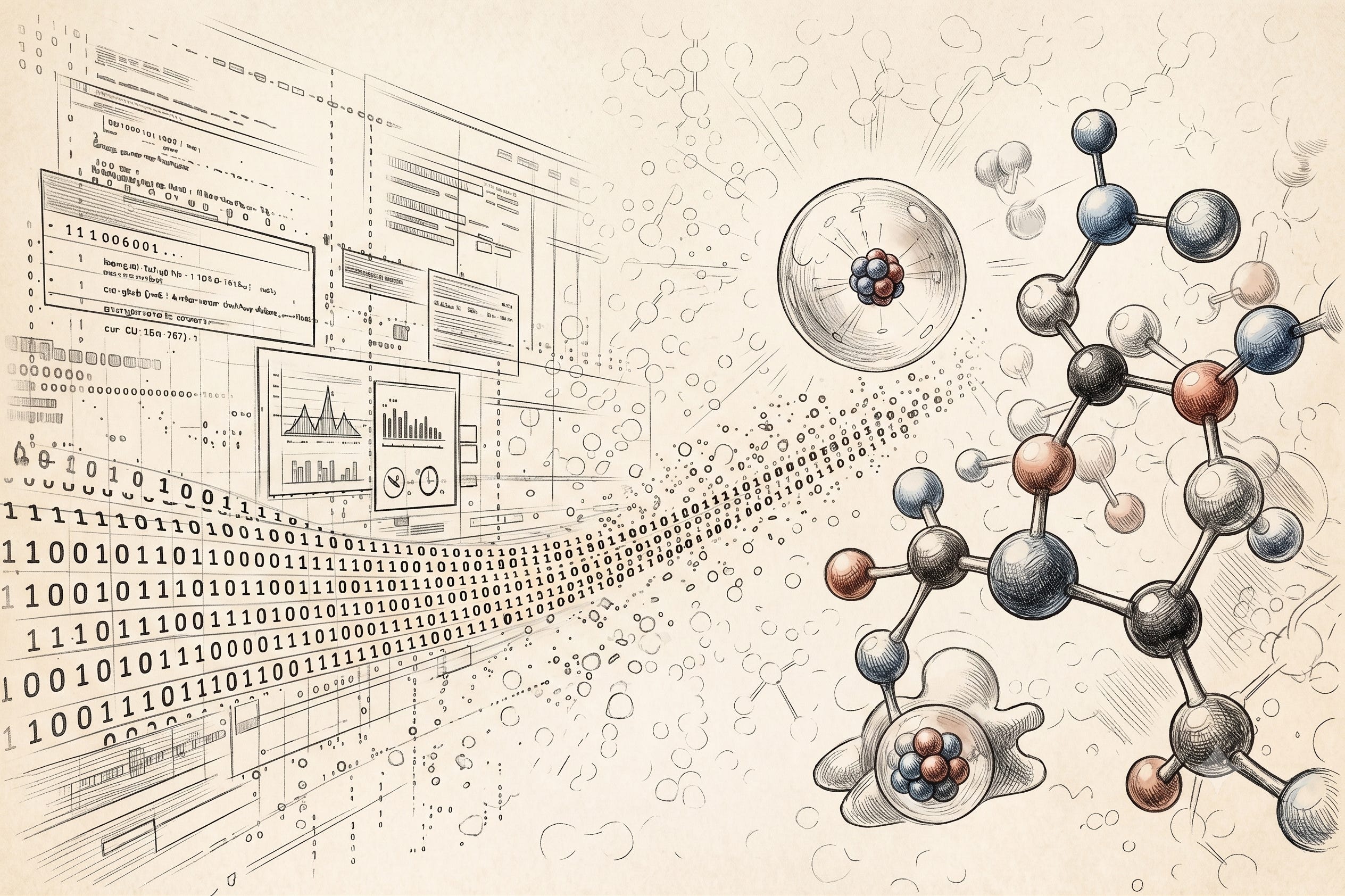
There are definitely situations where atoms and bits go together, and that's actually the more interesting investment — not because hardware alone creates a moat, but because the combination produces something that neither side can replicate on its own. The mistake wasn't loving software, because software deserved its moment and created real and effective efficiency in our world. The mistake was forgetting that two decades of obsession eventually becomes a blind spot, and somewhere in that period the physical world stopped feeling like a frontier and started feeling like a constraint.
You’ve often talked about how you love university spin-outs with real scientific breakthroughs. But when these scientists want to become entrepreneurs, what red flags emerge?
Actually, the red flags are already baked into the investment thesis.
I would almost say that you should assume that every scientist at a university with a potential spin-out is bad, because they’re probably going to be more focused on inventing something new than the commerciality of it. They’re not going to be looking at how much demand there is, what price people are willing to pay, whether you can make the product at a profit margin — all those commercial questions. Assume they’re not thinking much about that; they’re just thinking about their invention.
The most practical way is to get it right from the start: you either need to find a scientist who has the commercial lens as well as the scientific lens, or you need to pair them up with a commercial person.
Peter Thiel likes to ask this question, so I’ll borrow it: what important truth about the investing industry do most people fail to see?
I’m not 100% sure how contrarian this is, but in my view AI is a dangerous bubble.
A lot of AI businesses are not profitable, and never will be. The return on invested capital across much of the sector is negative or poor, enormous amounts of capex deployed for very little return. Even data centers, which everyone treats as the safe infrastructure play, have been generating something like 7% or 8% return on invested capital. That’s not good, and we’re arguably at peak demand right now.
Then there’s commodification. A lot of the LLMs have no real moat. You can just switch between them, and they know it. The capex required to build the models, pay for the data, the data centers, the chips, is enormous, and the depreciation is fast, the chips become outdated fairly quickly. On top of all that, valuations are crazy high. If you had all those characteristics and valuations were low, you could at least make a case. But that’s not the world we’re in.
When the bubble bursts, it won’t just hit AI-specific companies like OpenAI. It’ll hit the hyperscalers, semiconductor and memory-chip stocks, even the heating and cooling companies supplying the data centers. First-order and second-order effects. I’m not saying Google, Amazon, and Microsoft go to zero. But a 20% or 25% selloff is a real possibility. And, given their weight in the index, that’s kind of a lot for the index as a whole.
Here’s what makes it genuinely hard: saying the bubble will burst is the easy part. The harder thing is timing. If it keeps going up for five more years and then has a 25% drawdown, you’ve missed all the upside waiting to be right. My own view is that we’re looking at a severe drawdown within six to twelve months. And I’m positioning accordingly by reducing equity exposure and waiting for the moment to short the NASDAQ.
The reason I’m not sure how contrarian this really is: a lot of allocators I speak to are also concerned. But concern and action are different things. Verbally they’ll say AI is overvalued, and then turn around with a huge allocation to the S&P, which, given the concentration of hyperscalers in that index, is essentially the same bet.
Given that scenario, you’re still genuinely excited by technological progress.
We’re going to be a little philosophical again, but how do you respond to pessimists who think it doesn’t really change the human condition?
Whether technology can be used for evil as well as for good is a real concern. But I believe the source of the problem isn't the technology itself — it's scarcity.
In tribal periods, there was scarcity of water and of food. People fought each other for access to scarce resources. As technology develops and basic needs are met, people have less to fight over. That’s how I build the net benefit argument in my head.
Even with all the problems in the world today, compared to a thousand or five hundred years ago, the amount of war, plague, disease, it’s so much better than previous periods. Every day I’m grateful I can take a hot shower, and that if I get an infection I can get antibiotics. Even in the early 1900s, antibiotics didn’t exist. You could die from an infected tooth. It’s a very dangerous place to have an infection, your face, your head. Now you go to the dentist, get antibiotics, kill the infection. Child mortality has come down enormously. With less scarcity, there’s less reason to fight.
If you really want to get philosophical: take a technology that can be used for good or evil. AI. You could say it enables mass surveillance, deepfakes, fraud. But it’s also a powerful research tool, with enormous business applications. Technology can be used for both. The philosophical question is: if you net those two things, does it do more good or more harm? I’m not dismissing the misuse cases. But I think the net benefit is positive, and history is the evidence for that.
You've been thinking about all of this for a long time — technology, moats, where value actually compounds. If you're a young fund founder today trying to orient yourself in that landscape, where do you even start?
This is a really hard question, because I have been through it myself. There’s always this issue of whether to work at an existing fund and make your way there, or start your own. When I was at Moore Capital, I was running a team, and we got capital from the mothership, from the main fund — so in a way I had one client, one LP. Sometimes people would approach me and say, why don’t you leave and start your own fund, on your own, with your team?
If you do that, there’s a lot more to do. Inside a fund, all you do is invest — you just do your job. But running your own business, you have to be investing, running the business, marketing, and taking on the extra business risk. So you really need to think carefully: do you have the appetite, the drive, the interest in doing all those other things? Especially marketing — most funds that do well, if you start your own, you have to be very good at marketing, you have to really enjoy it. You can hire a good marketer, but you need to do a lot yourself too. It’s not the same.
You’ve been mentoring emerging GPs through WOA’s GP Accelerator. LPs spend most of their time being pitched at — why would one want to turn around and mentor the people pitching them?
Being a GP today, especially an emerging one, is hard. It’s essentially a startup: difficult to get off the ground, difficult to attract investors, and intensely competitive. Whatever guidance they can get from an LP, they genuinely appreciate. And it is fairly common. Some LPs do it with friends. Others are motivated by economics — if you’re the anchor LP in a fund, you sometimes own a piece of the GP, so you have a real stake in their success.
Both things are true at once, even though they sound contradictory. LPs are exhausted by the pitch cycle. They go to a conference and they’re surrounded, every conversation is another GP making their case. At some point they just want a break.
But the GPs they’ve chosen to back are a different matter. There’s a genuine emotional investment there — they admire them, they like them, they want them to win. They picked their favorites, put money behind them, and then they put time behind them too.
At its best, the relationship between an LP and a GP is generative in ways that go beyond the returns.
Mentorship is what that looks like when it’s working.
Steve Chasan is a multi-asset investor and venture advisor with over three decades of experience spanning proprietary trading, hedge fund management, and endowment investing.
He began his investment career at J.P. Morgan after completing doctoral studies in logic and philosophy at Columbia University, before going on to manage multi-billion dollar portfolios at Moore Capital Management and Graham Capital Management across global macro, long/short equity, and volatility strategies.
From 2020 to 2024, he served as Head of Investments at the Rothschild Foundation, where he co-managed a $4bn multi-asset portfolio across the full range of global asset classes, including private equity, venture capital, hedge funds, and public equities.
He subsequently founded Catalyst 42, a deep tech fund-of-funds platform focused on scientific and engineering innovation across robotics, next-generation compute, space tech, and life sciences. He currently serves as a venture partner and advisor to several venture capital funds and startups, and as a mentor in World of Allocators’ GP Accelerator program.
Uncommon Portraits is a member series produced by World of Allocators, featuring the volunteers who build and sustain our community.
The content produced by World of Allocators Limited is provided for informational purposes only and should not be construed as legal, business, investment, or tax advice.